


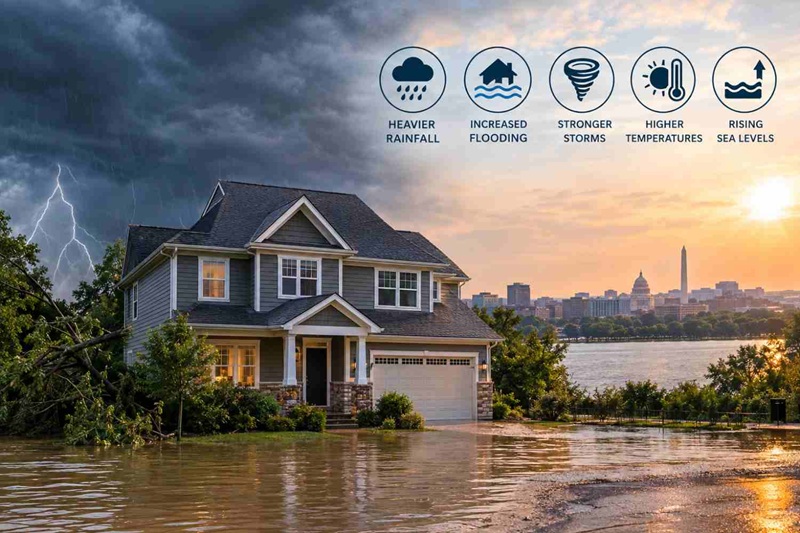
A heavy storm can turn an ordinary day into a homeowner’s worst nightmare. Water begins pooling in the basement, a damaged roof lets rain inside, or a fallen tree crashes through a fence. Across Washington, D.C., Maryland, and Virginia, changing weather patterns are making these situations more important to think about. Climate change property damage is no longer just a concern for coastal communities or areas prone to hurricanes. Homeowners and businesses throughout the DMV are facing a range of weather-related risks that deserve attention.
Climate change does not mean that every storm will be stronger or that every property will experience damage. However, warmer temperatures, shifting rainfall patterns, intense downpours, and rising water levels can create conditions that make certain types of damage more likely. Knowing what these risks look like—and taking action before a storm arrives—can help property owners avoid costly surprises.
Why the DMV Is Vulnerable to Changing Weather
The DMV has a mix of urban neighborhoods, suburban communities, rivers, streams, wooded areas, and low-lying land. That variety gives the region its character, but it also creates different types of weather-related challenges.
Washington, D.C., and nearby communities have extensive paved surfaces, including roads, sidewalks, parking lots, and driveways. During heavy rainfall, water cannot easily soak into the ground. Instead, it runs across these surfaces and can quickly overwhelm storm drains and drainage systems.
Maryland faces additional concerns because of its proximity to the Chesapeake Bay, rivers, and coastal areas. Parts of Virginia also experience flooding along rivers, streams, and low-lying urban areas.
According to the Maryland Department of Natural Resources, climate projections indicate that Maryland could experience changes in rainfall, more intense precipitation events, rising temperatures, and increased flooding risks. These changes can affect not only the environment but also the homes, businesses, roads, and infrastructure that communities depend on.
Heavy Rainfall and Flash Flooding Can Damage Homes
For many property owners in the DMV, flooding is one of the most immediate concerns associated with changing weather.
A storm does not have to last all day to cause serious problems. A short period of intense rainfall can send water into basements, overwhelm drainage systems, and create runoff that moves quickly through streets and neighborhoods.
The National Weather Service identifies flooding as a significant hazard in the Washington, D.C., area. Flash floods can occur when heavy rainfall exceeds the capacity of drainage systems or causes streams and waterways to rise rapidly.
Even properties that have never flooded before may not be completely protected. A blocked storm drain, saturated ground, damaged gutter, or poorly directed downspout can create an opportunity for water to enter a building.
Common types of flood-related property damage include:
- Water entering through basement windows or foundation cracks.
- Damage to drywall, insulation, flooring, and furniture.
- Electrical and HVAC system problems.
- Contamination caused by sewage or polluted floodwater.
- Mold growth when wet materials are not dried promptly.
- Erosion around foundations, walkways, and landscaping.
The cost of repairs can increase significantly when water remains inside a property for an extended period. What begins as a wet basement may eventually become a much larger restoration project.
Rising Temperatures Can Affect Buildings and Infrastructure
Flooding is not the only concern. Increasing temperatures can also affect the condition and performance of buildings.
During prolonged periods of extreme heat, roofing materials, exterior finishes, insulation, and HVAC systems may experience additional stress. Air-conditioning systems may need to work harder to maintain comfortable indoor temperatures, increasing energy consumption and operating costs.
Urban areas can be especially vulnerable to high temperatures because concrete, asphalt, and buildings absorb and retain heat. The Environmental Protection Agency explains that cities can experience higher temperatures than surrounding areas because of the urban heat island effect.
Heat can also contribute to other property problems. For example, extreme temperatures may worsen existing weaknesses in roofing or exterior materials. When heavy rainfall follows a period of dry weather, runoff can also become a concern, particularly in developed areas where water has fewer places to go.
For homeowners, regular maintenance is one of the simplest ways to reduce the impact of these conditions. Checking roof materials, maintaining HVAC equipment, inspecting exterior surfaces, and addressing small problems early can help protect a property over time.
Coastal and Tidal Flooding Are Long-Term Concerns
Some parts of Maryland and Virginia face another challenge: rising water levels and coastal flooding.
The Chesapeake Bay and surrounding waterways are important to the region’s economy, environment, and communities. However, properties near shorelines, tidal rivers, and low-lying areas may be exposed to flooding during storms, high tides, and periods of elevated water levels.
The National Oceanic and Atmospheric Administration reports that Maryland is experiencing sea-level rise, which can increase the risk of coastal flooding and shoreline erosion. Higher baseline water levels can make certain flood events more disruptive, even when a storm itself is not unusually powerful.
This does not mean that every property near the water will experience damage. Risk depends on factors such as elevation, drainage, flood barriers, distance from waterways, and the condition of nearby infrastructure.
Property owners in vulnerable areas should consider both current flood exposure and how conditions may change over the years. Reviewing flood maps, understanding local drainage patterns, and discussing insurance options can help families and businesses make more informed decisions.
Strong Storms Can Lead to Multiple Property Problems
Severe weather often creates more than one type of damage. A single storm may bring strong winds, heavy rain, lightning, and falling trees.
For example, high winds can loosen shingles or damage flashing on a roof. Rain then enters through the opening and soaks the attic, insulation, ceiling, and walls. If a tree falls on a structure, the resulting damage may involve the roof, electrical wiring, windows, and interior finishes.
These situations can be stressful because the visible damage may only be part of the problem.
A property owner might notice a ceiling stain but not realize that moisture has traveled into the insulation or wall cavity. Similarly, a wet carpet may appear manageable while moisture underneath the flooring creates additional issues.
This is why climate change property damage should be considered in terms of the full recovery process, not just the initial repair bill. Identifying hidden moisture, securing the building, and addressing the source of the damage can help prevent a small problem from becoming more expensive.
How Climate-Related Damage Can Affect Insurance and Property Values
Weather-related damage can have financial consequences beyond the cost of repairs.
Depending on the location and type of risk, property owners may face higher insurance premiums, different coverage requirements, or difficulty understanding what their policies actually cover. Standard homeowners insurance, for example, does not generally cover every type of flood damage.
The Federal Emergency Management Agency recommends that property owners understand their individual flood risk and consider appropriate protection, including flood insurance when necessary.
The Congressional Budget Office has also examined how climate-related risks can affect property damage, insurance markets, and property values. In areas where the risk of flooding or other disasters increases, buyers, lenders, and insurers may pay closer attention to the property’s exposure.
Homeowners should not assume that a property is safe simply because it has never experienced a major loss. Reviewing insurance coverage before an emergency occurs is much easier than trying to understand exclusions after damage has already happened.
Practical Ways to Protect Your Property
Although no one can prevent every severe weather event, homeowners and business owners can take steps to reduce the likelihood and severity of damage.
1. Inspect Your Roof Before Storm Season
Look for missing shingles, cracked flashing, damaged vents, and other signs of wear. A small weakness can allow water to enter during heavy rain.
2. Clean Gutters and Check Downspouts
Leaves, dirt, and debris can prevent water from draining properly. Make sure downspouts direct water away from the foundation rather than toward the building.
3. Pay Attention to Basement Moisture
If your basement has a history of dampness, consider appropriate drainage improvements, sump pump maintenance, and backup power where needed. Do not ignore musty odors, damp walls, or recurring water stains.
4. Keep Important Items Off the Floor
Store important documents, electronics, valuables, and other sensitive belongings in elevated or protected locations, particularly in basements or other areas vulnerable to flooding.
5. Maintain Trees Around the Property
Dead branches and unhealthy trees can become dangerous during high winds. Regular trimming and professional tree inspections may help reduce the risk of falling branches or trees damaging structures.
6. Review Your Insurance Policy
Find out whether your coverage includes the types of water and storm damage your property may face. Ask questions about flood insurance, deductibles, exclusions, and coverage limits.
7. Respond Quickly After Water Enters the Building
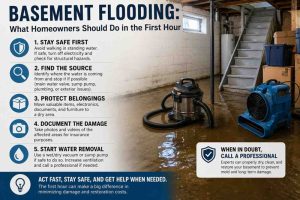
If a storm causes water intrusion, act promptly. Removing standing water, drying affected materials, and identifying hidden moisture can help limit secondary damage.
Why Fast Restoration Matters After Weather Damage
When water enters a home or business, delays can make recovery more difficult. Porous materials such as drywall, wood, carpeting, and insulation can absorb moisture quickly. If they remain wet, they may develop odors, deteriorate, or create conditions favorable to mold growth.
A professional restoration team can assess the affected area and determine what needs to happen next. Depending on the situation, the process may include water extraction, moisture detection, structural drying, dehumidification, cleaning, and repairs.
Not every storm-related problem requires the same response. A small roof leak may need a different solution from a flooded basement or sewage backup. The important thing is to identify the source of the damage and avoid allowing moisture to remain untreated.
Preparing for the Future of Property Damage in the DMV
Climate change is a long-term challenge, but preparing for it does not have to be overwhelming. Small steps—such as maintaining drainage systems, inspecting roofs, protecting basements, and reviewing insurance—can make a meaningful difference.
Property owners should also pay attention to local weather alerts and understand the specific risks associated with their neighborhood. A home near a creek may face different challenges from a commercial building in a densely developed urban area.
The goal is not to predict every storm. It is to make the property better prepared to handle the conditions that may arise.
As the DMV continues to experience changing temperatures and rainfall patterns, taking property maintenance seriously can help reduce the impact of climate change property damage. Preparation cannot eliminate every risk, but it can improve the chances of limiting damage and recovering more quickly when severe weather strikes.
Need Help After Storm or Water Damage? Contact Tri State Restorations
When a storm, flood, roof leak, or other emergency damages your property, having a reliable restoration company to call can make the recovery process less stressful. Tri State Restorations provides restoration and mitigation services for residential and commercial properties throughout the DMV region. Its services include water damage restoration, mold remediation, fire and smoke restoration, sewage cleanup, and other disaster recovery solutions. If your home or business has experienced weather-related damage, contact Tri State Restorations to discuss the situation and determine the appropriate next steps. Acting quickly may help prevent additional damage and get your property back to a safe, comfortable condition.