




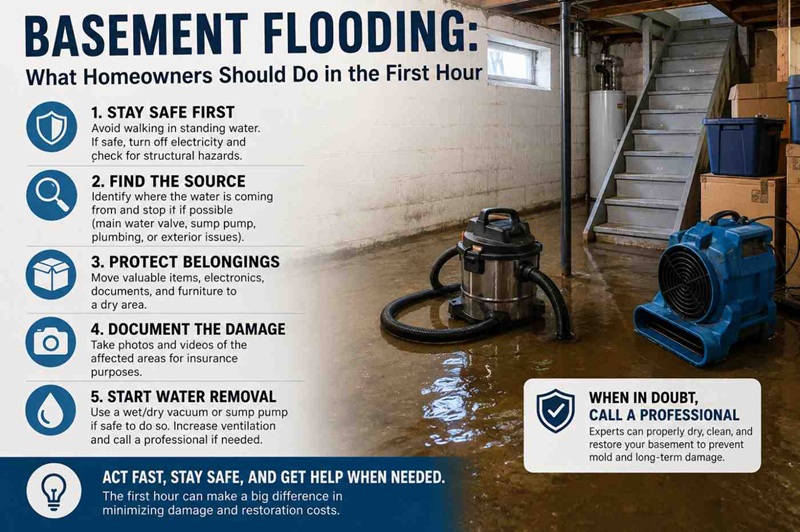
When Basement Flooding happens, the first hour can make a major difference in how much damage your home experiences. Rising water can quickly affect flooring, drywall, furniture, electrical systems, insulation, and personal belongings. Acting quickly but safely is essential. Homeowners should first protect people from electrical and structural hazards, identify the likely source of the water if possible, and then begin appropriate emergency response measures.
Why the First Hour Matters After a Basement Flood
Water does not stay where it first appears. It can spread beneath flooring, soak drywall, penetrate insulation, and move into wall cavities. Porous materials may begin absorbing water almost immediately.
The longer water remains inside the basement, the greater the possibility of:
- Permanent damage to flooring and walls.
- Damage to furniture, appliances, and stored belongings.
- Mold and microbial growth.
- Electrical hazards.
- Structural deterioration.
- Unpleasant odors.
- More expensive restoration work.
Fast action does not mean rushing into standing water. Safety should always come before cleanup.
First 10 Minutes: Protect People and Stay Safe
Your first priority should be keeping everyone away from potentially dangerous areas.
If water is standing near electrical outlets, appliances, electrical panels, extension cords, or other powered equipment, do not walk through the water to reach them. Water and electricity can create a potentially life-threatening shock hazard.
If you can safely access the home’s main electrical shutoff without entering standing water, turn off the electricity. If you cannot reach it safely, contact a qualified electrician or emergency professional.
Also watch for:
- Contaminated or sewage water.
- Damaged ceilings or walls.
- Unstable flooring.
- Broken glass or sharp objects hidden underwater.
- Gas odors.
- Structural movement or cracking.
If you smell gas, leave the property immediately and contact the appropriate emergency utility service.
Minutes 10–20: Identify Where the Water Is Coming From
Once everyone is safe, try to determine the source of the water.
Common causes include:
- Heavy rain or storm-water.
- Foundation leaks.
- Failed sump pumps.
- Clogged or damaged drainage systems.
- Burst plumbing pipes.
- Water heater failures.
- Sewer backups.
- Overflowing appliances.
- Poor exterior drainage.
If the source is a plumbing failure and you can safely reach the home’s water shutoff valve, turn off the water supply.
For storm-related flooding, look outside if conditions are safe. Blocked gutters, overflowing downspouts, poor grading, or saturated soil can contribute to water entering a basement.
Knowing the source can help determine the appropriate emergency response and prevent additional water from entering the property.
Minutes 20–30: Protect Valuable Belongings
After addressing immediate hazards, move unaffected belongings to a dry location whenever it is safe to do so.
Prioritize items that are:
- Valuable.
- Important documents.
- Difficult to replace.
- Easily damaged by moisture.
Move furniture, electronics, photographs, books, clothing, and other belongings away from affected areas.
However, don’t risk injury to save property. Heavy furniture can become unstable when wet, and electrical equipment should not be handled while wet or connected to power.
Minutes 30–40: Document the Damage
Before extensive cleanup begins, take photographs and videos of the affected areas.
Document:
- Where the water entered.
- Approximate water level.
- Damaged walls and flooring.
- Furniture and appliances.
- Personal belongings.
- Visible stains or contamination.
- Damaged electrical components.
- Exterior drainage conditions, when relevant.
This documentation can be useful when communicating with your insurance company and restoration professionals.
Avoid throwing away heavily damaged belongings immediately unless they pose a health or safety risk. Your insurance carrier may need to inspect or document certain items.
Minutes 40–60: Begin Safe Water Removal
If the water is clean, the electricity is safely disconnected where necessary, and there are no obvious hazards, homeowners may be able to begin limited water removal.
Depending on the situation, this could involve:
- Using a wet/dry vacuum designed for water removal.
- Using a sump pump if it is functioning properly and safe to operate.
- Removing small amounts of standing water with appropriate equipment.
- Increasing ventilation when outdoor conditions allow.
- Moving wet belongings to a dry, ventilated area.
Never use ordinary household vacuums to remove standing water.
If the basement contains sewage, groundwater contamination, chemicals, or a large volume of water, avoid direct contact and contact a professional restoration company.
What Homeowners Should NOT Do
During an emergency, some cleanup attempts can actually increase the risk of injury or property damage.
Avoid:
Don’t Enter Electrically Dangerous Water
Never assume standing water is safe simply because you cannot see exposed wires.
Don’t Use Regular Vacuums
Household vacuums are not designed for standing water and can create serious electrical hazards.
Don’t Turn on Wet Appliances
Refrigerators, washers, dryers, furnaces, water heaters, and other equipment exposed to water should be evaluated before being powered on.
Don’t Ignore Sewage or Contaminated Water
Sewage-contaminated water can contain harmful microorganisms and should be handled using appropriate protective procedures and professional equipment.
Don’t Wait for the Water to “Dry on Its Own”
Visible standing water is only part of the problem. Moisture can remain underneath flooring, behind walls, and inside insulation.
When to Call a Professional
Professional water damage restoration may be appropriate when the flooding is extensive, contaminated, difficult to control, or has affected building materials and mechanical systems.
Consider professional assistance when:
- Water covers a large portion of the basement.
- Sewage has entered the property.
- Walls or ceilings have absorbed significant moisture.
- The sump pump has failed.
- Electrical systems may have been affected.
- Water continues entering the basement.
- Flooring or insulation is saturated.
- You cannot determine the source of the water.
- The basement has remained wet for an extended period.
Professionals can use moisture meters, extraction equipment, air movers, dehumidifiers, and other specialized tools to identify and address hidden moisture.
How to Reduce Damage After Basement Flooding
After the immediate emergency has been controlled, the next objective is drying the structure thoroughly.
Simply removing visible water may not be enough. Moisture can remain trapped beneath flooring and inside porous materials.
A proper restoration process may include:
Inspection → Water extraction → Moisture detection → Structural drying → Cleaning → Dehumidification → Repairs
The appropriate process depends on the water source, contamination level, affected materials, and extent of the damage.
Don’t Forget About Insurance
Contact your insurance provider as soon as reasonably possible after a significant flood event.
Keep records of:
- Photos and videos.
- Damaged belongings.
- Emergency services.
- Cleanup expenses.
- Restoration estimates.
- Receipts for temporary repairs.
- Communication with contractors and insurers.
Do not make permanent repairs before documenting the damage unless immediate action is necessary to prevent additional loss or protect people from danger.
How to Prevent Future Basement Flooding
Once the immediate problem has been resolved, investigate why the water entered the basement.
Preventive measures may include:
- Maintaining gutters and downspouts.
- Directing downspouts away from the foundation.
- Checking the grading around the property.
- Maintaining the sump pump.
- Installing a backup sump pump where appropriate.
- Testing drainage systems.
- Inspecting foundation areas for cracks or leaks.
- Maintaining plumbing systems.
- Considering a battery backup for sump pump systems.
Regular maintenance can reduce the likelihood of another emergency.
Final Thoughts
Basement Flooding can turn into a major property problem quickly, but homeowners can limit the damage by responding methodically during the first hour. Start with personal safety, stop the source when it can be done safely, protect valuable belongings, document the damage, and begin appropriate water removal.
If the water is extensive, contaminated, or has affected electrical systems or structural materials, professional restoration is often the safest approach. The goal isn’t simply to remove visible water—it is to identify and eliminate hidden moisture before it creates larger problems.
The most important rule is simple: never put your safety at risk to save property. A quick, informed response can help protect your home, your belongings, and your family’s safety while making the restoration process more manageable.
Quick First-Hour Action Plan
0–10 minutes: Stay out of hazardous water and address immediate safety concerns.
10–20 minutes: Identify and stop the water source if it can be done safely.
20–30 minutes: Move unaffected valuables and belongings to a dry area.
30–40 minutes: Photograph and document the damage.
40–60 minutes: Begin safe water removal or contact a professional restoration company.
After the first hour: Continue drying, notify your insurer when appropriate, and address the underlying cause.
Professional Basement Flood Restoration You Can Rely On
If your basement has flooded, Tri State Restorations LLC provides 24/7 emergency water damage restoration and mitigation throughout the Washington, D.C. metropolitan area, including Maryland and Virginia. Their IICRC-certified technicians can assess water damage, perform emergency water extraction, structural drying, dehumidification, moisture detection, and restoration to help minimize secondary damage and get your property back to a safe condition. For immediate assistance after a basement flood, contact Tri State Restorations to request emergency restoration service.