


Understanding Emergency Mitigation, Xactimate, and Why Time Matters After Property Damage
Some of the most common questions we receive at Tri State Restorations are:
“Why am I signing paperwork before you know exactly what the project will cost?”
Or…
“If the work is already finished, why did I receive an estimate instead of an invoice?”
They’re excellent questions—and if you’ve never experienced water, fire, mold, or sewage damage before, the process can seem confusing.
The answer lies in how emergency restoration differs from almost every other home service.
Unlike a planned renovation or remodeling project, emergency mitigation often cannot wait for a finalized scope of work.
Emergency Mitigation Isn’t Scheduled Construction
Imagine your washing machine supply line bursts while you’re at work.
By the time you arrive home:
- Water has spread beneath your flooring and cupping may already be present.
- Drywall and baseboards have absorbed and wicked moisture up.
- Cabinets may already be swelling.
- Hidden moisture may be traveling behind walls.
- Humidity inside the home has increased dramatically due to the moisture present.
Waiting several days for inspections, pricing, approvals, or contracts would allow the damage to continue spreading. It also, unfortunately, gives your insurance carrier grounds to deny you for negligence.
That’s why emergency mitigation is designed to begin as quickly as possible.
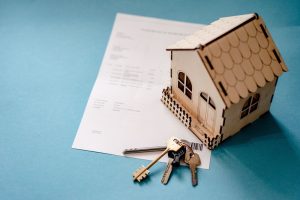
A Work Authorization gives the restoration contractor permission to stabilize the property immediately while the full extent of the damage is being investigated.
It’s different from a pre-scheduled mitigation project, where the source of damage has already been resolved, the conditions are stable, and there is time to prepare a detailed scope before work begins.
Both services exist—but emergency losses require emergency decisions.
Why Every Hour Matters
Water damage is constantly changing.
Even after the leak has been stopped, moisture continues to migrate through building materials by gravity, capillary action, and evaporation.
That means water doesn’t simply stay where it first landed.
Instead, it continues moving into drywall, insulation, flooring, framing, trim, cabinetry, and other porous materials.
Industry guidance commonly recognizes that the longer materials remain wet, the greater the risk of secondary damage.
While every loss is unique and conditions such as temperature, humidity, and material type influence the timeline, here’s what can generally happen:
Within the First 24 Hours After Water Damage
- Water continues migrating through porous materials.
- Drywall begins absorbing moisture.
- Wood flooring may begin swelling or cupping.
- Indoor humidity rises.
- The opportunity to save affected materials is at its highest.
Approximately 24–48 Hours After Water Damage
- Conditions may become favorable for mold and microbial growth, especially in hot summer months.
- Odors may begin developing.
- Adhesives and finishes of building materials and content can start to deteriorate.
- Additional building materials may become affected if drying has not yet begun.
48–72 Hours and Beyond After Water Damage
- Mold growth may become more established under favorable conditions.
- Drywall can lose structural integrity and collapse.
- Hardwood flooring may experience more significant distortion.
- Reconstruction costs often increase as additional materials become unsalvageable.
The sooner mitigation begins, the greater the opportunity to reduce secondary damage and preserve as much of the property as possible.
What Exactly Is a Work Authorization?
A Work Authorization is not a final construction contract with a fixed project price.
Instead, it authorizes emergency services necessary to protect your property from additional damage.
It allows restoration professionals to:
- Extract standing water
- Begin structural drying
- Perform moisture mapping
- Remove unsalvageable materials when necessary
- Install drying equipment
- Document conditions
- Help fulfill the property owner’s responsibility to take reasonable steps to mitigate further damage
Without this authorization, valuable time could be lost while damage continues to worsen.
If the Work Is Already Finished, Why Do I Receive an Estimate?
This is probably the biggest misconception in the restoration industry.
Many homeowners expect an invoice that simply lists:
- Labor
- Equipment
- Materials
- Hours worked
Instead, they receive what appears to be an estimate.
Why?
Because professional restoration projects are commonly documented using Xactimate®, the estimating platform used extensively throughout and created by the property insurance industry.
What Is Xactimate?
Xactimate is a standardized estimating platform that contains regional pricing for thousands of restoration and reconstruction tasks.
Insurance carriers, independent adjusters, restoration contractors, consultants, and many reconstruction professionals use Xactimate to document the work required to restore a property after a covered loss.
Although it’s called an estimating platform, in insurance restoration it often serves a second purpose—it becomes the standardized pricing and documentation used to support billing and facilitate claim review.
Think of it this way:
The restoration work happens in the field.
Xactimate organizes that work into a detailed, itemized scope using standardized line items and regional pricing so that everyone involved in the claim is speaking the same language. Apples to Apples.
Why Isn’t It Just Time and Materials?
Many customers assume restoration projects are billed like a plumber or electrician—hourly labor plus materials.
Emergency restoration is different.
Rather than billing only for hours worked, professional mitigation is typically documented as a detailed scope of services performed.
That scope may include hundreds of individual line items representing:
- Water extraction
- Emergency dispatch
- Moisture mapping
- Containment
- Protective coverings
- Demolition
- Equipment setup
- Daily monitoring
- Moisture documentation
- Cleaning
- Disposal
- Safety procedures
- Specialized labor
- Equipment usage
- Project management
Using standardized line items creates consistency and transparency for everyone reviewing the claim.
Why Doesn’t the Estimate Match What I Can See?
Much of the work performed during mitigation isn’t visible after the project is complete.
Customers often remember seeing:
- A few openings cut in drywall
- Air movers
- Dehumidifiers
What they don’t always see are the hours spent:
- Locating hidden moisture
- Monitoring psychrometric conditions
- Taking moisture readings
- Photographing damage
- Adjusting drying equipment
- Documenting progress
- Communicating with the insurance carrier
- Preparing claim documentation
- Following recognized drying standards
- Content manipulation
The visible work is only one part of the restoration process.
The Restoration Reality
Emergency mitigation is designed to protect your property—not delay the response while every detail is priced in advance.
A Work Authorization allows professionals to begin stabilizing your home immediately.
The completed work is then documented using industry-standard estimating software that creates a detailed scope reflecting the services performed and supporting the insurance claim review process.
Understanding this process helps explain why emergency restoration looks different from traditional home improvement projects.
How Tri State Restorations Helps
At Tri State Restorations, we believe that an informed customer is a confident customer.
That’s why we take the time to explain every step of the restoration process—from emergency authorization and structural drying to insurance documentation and final reconstruction.
Our goal isn’t simply to restore your property. It’s to help you understand the process, reduce uncertainty, and guide you through one of the most stressful experiences a property owner can face.
Because when you understand what’s happening, recovery becomes a little less overwhelming.
Understanding the process, the paperwork and how your policy impacts your recovery; a Q&A series:
Q1: Why was I asked to sign a Work Authorization before receiving a final price estimate?
A: Property restoration is an emergency service. Water, fire, and mold damage get progressively worse every hour. To stop the damage and protect your home, our crews must begin mitigating the loss immediately.
A Work Authorization is not a final bill; it is a standard industry document that grants us permission to start the emergency cleanup. Because hidden structural damage often reveals itself only after we begin drying or removing ruined materials, a precise final cost cannot be calculated on day one. Waiting days for a finalized price estimate would allow mold to grow and structural damage to worsen—risking a claim denial by your insurance carrier for failing to mitigate the loss.
Q2: Why is there a difference between Tri State’s estimate and what my insurance company wants to pay?
A: This is a very common part of the insurance negotiation process. Tri State Restorations estimates work using Xactimate, the exact same standardized pricing software used by major insurance carriers.
When a price discrepancy occurs, it is rarely about the cost of the materials. Instead, it is usually because:
- Policy Limits & Sub-limits: Your policy may have a maximum payout cap for specific types of damage (e.g., a $5,000 limit for sewage backup or mold remediation), even if the actual damage costs more to fix.
- Exclusions: Your specific policy might exclude coverage for certain structural materials or pre-existing conditions.
- Adjuster Differences: An off-site insurance adjuster may look at photos, while our technicians are on-site measuring exact moisture levels.
We work directly with your adjuster, sending daily data and photos to advocate and justify the full scope of repairs needed to return your property to a safe, pre-loss condition.
Q3: Why did technicians place so much equipment in my home? Was it all necessary?
A: Yes, absolutely. The amount of equipment we place—such as industrial dehumidifiers and air movers—is not a random guess or a way to increase costs. It is strictly dictated by the IICRC S500, which is the national standard for professional water damage restoration.
We calculate the exact number of machines required based on the cubic footage of the room, the types of materials affected (drywall, wood, carpet), and the severity of the water intrusion. Cutting corners by using fewer machines, or turning them off early, leaves hidden moisture trapped inside your walls. This leads to structural rot and toxic mold growth. We keep precise daily logs of moisture levels to prove to your insurance company exactly why every piece of equipment was required.
Q4: Am I responsible for paying out-of-pocket costs?
A: By law, you are always responsible for paying your insurance policy’s deductible. Beyond that, out-of-pocket costs only occur if your insurance policy limits or exclusions prevent your carrier from covering the entire scope of the damage.
We are fully transparent throughout the process. If your insurance company indicates they will deny or cap a specific portion of the work due to your policy’s fine print, we will alert you immediately so we can discuss your options.
Q5: How long does the insurance negotiation process take?
A: While the physical emergency cleanup usually takes a few days, finalizing the financial claim with your insurance company can take anywhere from a few weeks to several months. Insurance carriers often process large volumes of claims, and reviewing line-by-line structural data takes time. Rest assured, our dedicated office team handles the heavy lifting, staying in consistent contact with your adjuster to push your claim through to a resolution as quickly as possible.
Sharing is caring!