




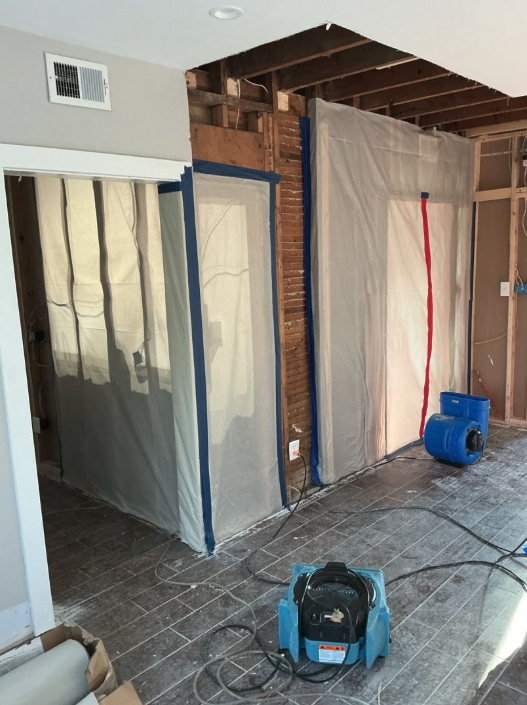
One of the first things homeowners notice after a water loss is the amount of equipment that arrives.
It’s common to ask:
“Do I really need all of these fans and dehumidifiers?”
The short answer is yes—but not because someone is guessing.
Drying Is Based on Science
Professional water damage restoration follows recognized IICRC industry standards for structural drying.
Technicians evaluate:
- The size of the affected area
- The type of building materials (i.e.: drywall, plaster, stone, concrete, wood)
- Moisture content
- Indoor temperature
- Relative humidity
- Air movement
This information determines the proper number and placement of drying equipment.
Why Equipment Changes During the Project
As materials begin drying, technicians monitor moisture readings daily.
Equipment may be:
- Added
- Relocated
- Removed
based on documented drying progress.
The goal isn’t to leave equipment running longer than necessary. Typical dry standards are met within 72 hours.
The goal is to return building materials to acceptable drying conditions while minimizing the risk of secondary damage.
Can Equipment Be Removed Early?
Removing equipment too soon may leave moisture trapped inside walls, flooring, or structural materials.
That hidden moisture can contribute to:
- Mold growth
- Odors
- Material deterioration
- Additional repairs
The Restoration Reality
Professional drying equipment isn’t selected by opinion or pricelists—it’s based on documented moisture conditions and recognized drying standards.
How Tri State Restorations Helps
Our technicians monitor drying conditions every day, adjusting equipment based on actual moisture readings to help ensure your property is dried as efficiently and safely as possible.